


.svg)
How Does an LLC Pay Taxes in the U.S.? A Simple Guide to LLC Taxation
Introduction
Starting a business often leads to the same question:
How does an LLC actually pay taxes?
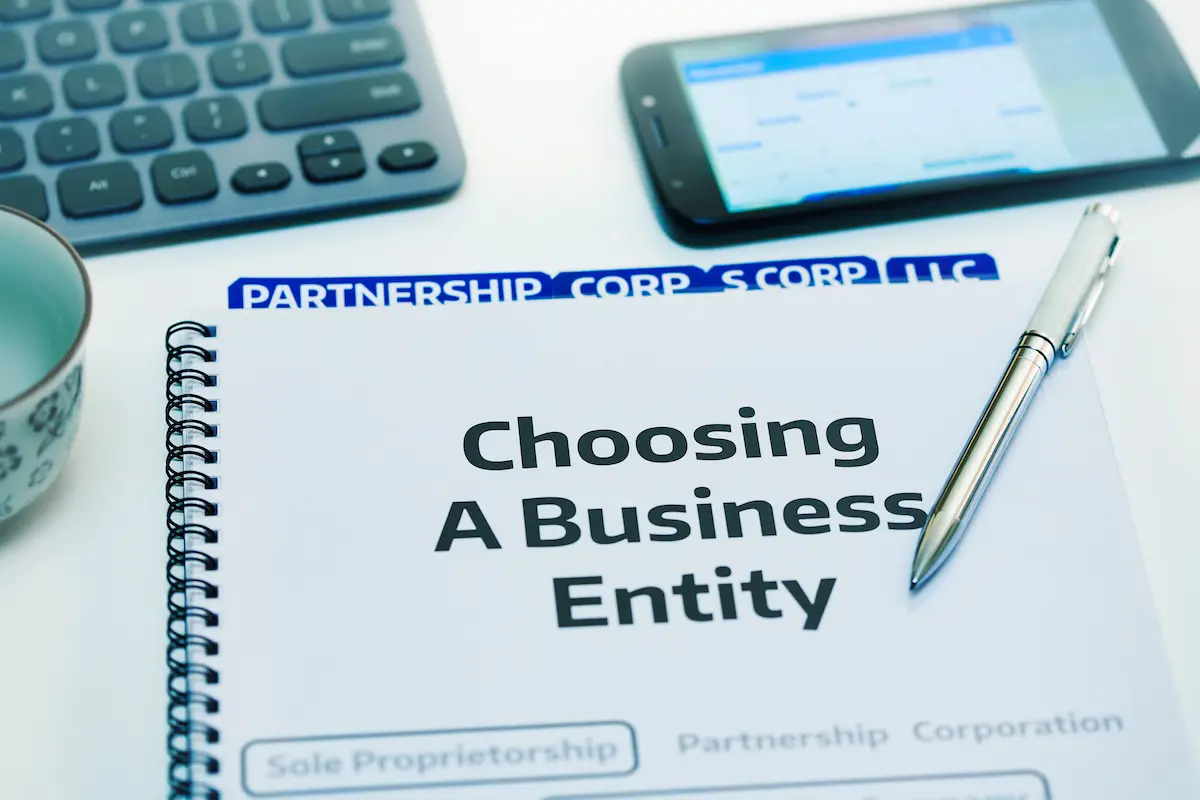
A Limited Liability Company, or LLC, is one of the most popular business structures in the United States. One reason is flexibility. Unlike corporations, an LLC does not have a single fixed tax classification.
Instead, how an LLC is taxed depends on several factors:
- The number of owners, also called members
- Whether the business elects a specific tax classification
- The type of income the business generates
Because of this flexibility, LLC taxation can be confusing for new business owners. Understanding how the different options work can help you choose the structure that best fits your financial goals.
Default Tax Treatment of an LLC
By default, the IRS does not tax an LLC as a separate entity. Instead, income flows through to the owners, who report it on their personal tax returns.
For this reason, LLCs are commonly called pass-through entities.
The default tax classification depends on the number of owners.
Single-Member LLC (SMLLC)
A single-member LLC is treated as a disregarded entity for federal tax purposes.
This simply means the IRS treats the business as part of the owner's personal tax return.
How it works
- The LLC does not file a separate federal income tax return
- Income and expenses are reported on Schedule C
- Schedule C is filed together with the owner's Form 1040
Taxes that apply
Owners typically pay:
- Federal income tax
- Self-employment tax, which covers Social Security and Medicare
Example
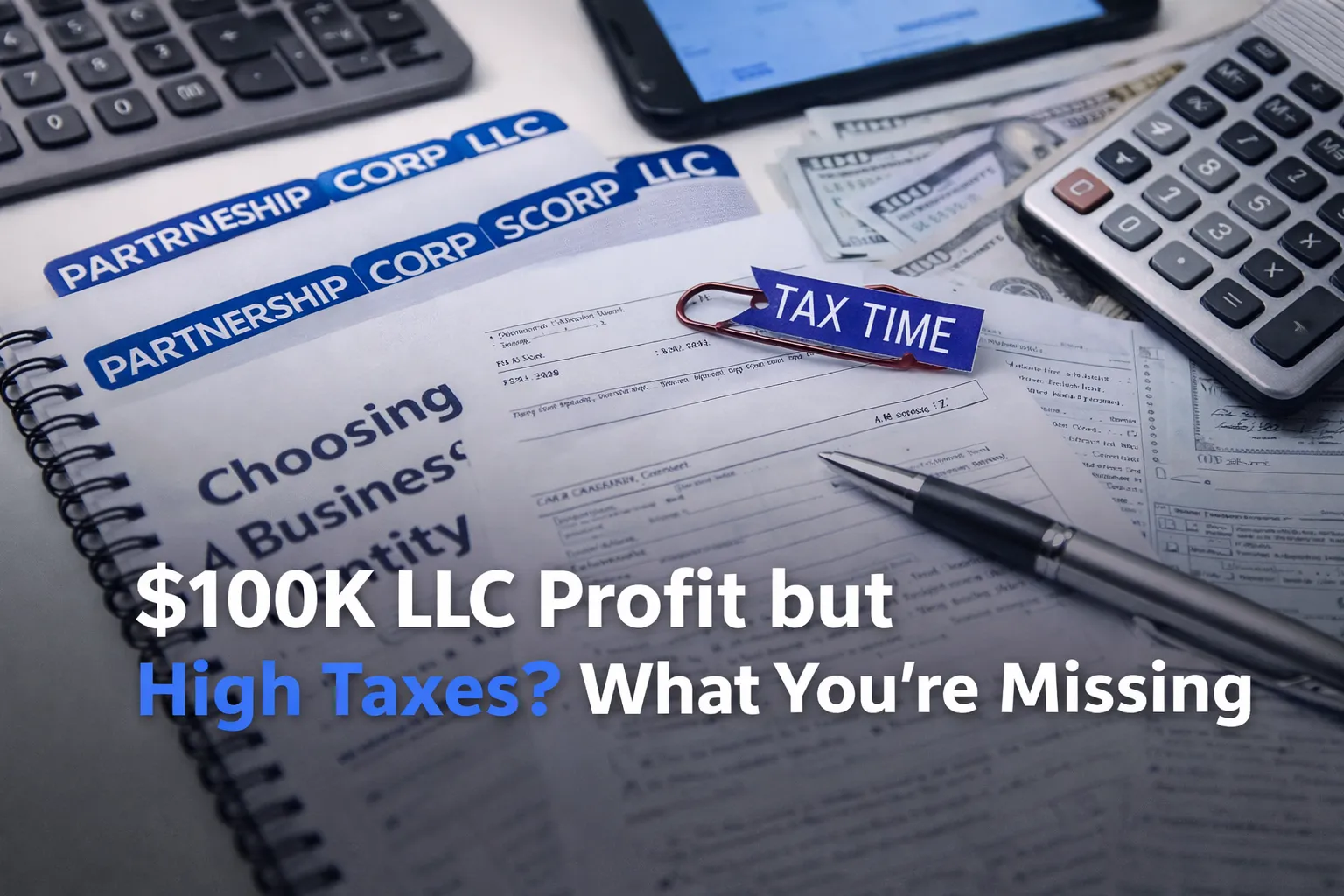
If a single-member LLC generates $100,000 in profit, that amount is reported on the owner’s personal tax return and taxed accordingly.
Multi-Member LLC (Partnership Taxation)
When an LLC has two or more members, the default classification is partnership taxation.
How it works
- The LLC files Form 1065, which is an informational tax return
- Each member receives a Schedule K-1
- Members report their share of profit or loss on their personal tax returns
Important detail
The LLC itself does not pay federal income tax.
Instead, each member pays tax on their share of the profits, even if the business does not distribute the money to them.
This is another example of pass-through taxation.

LLC Electing S-Corporation Status
An LLC can elect to be taxed as an S-Corporation by filing Form 2553 with the IRS.
Many small businesses choose this option because it can reduce self-employment taxes in certain situations.
How S-Corp taxation works
- Owners must take a reasonable salary, which is subject to payroll taxes
- Remaining profits may be distributed as dividends
- These distributions are generally not subject to self-employment tax
When S-Corp taxation may be beneficial
S-Corp status may make sense for businesses that:
- Generate stable and consistent profits
- Earn significantly more than the owner’s reasonable salary
- Are prepared to handle additional payroll and compliance requirements
However, S-Corporations involve additional administrative responsibilities such as payroll reporting and corporate filings.
LLC Electing C-Corporation Status
An LLC may also elect to be taxed as a C-Corporation by filing Form 8832.
Under this structure, the business becomes a separate taxable entity.
How it works
- The company pays corporate income tax
- The current federal corporate tax rate is 21 percent
- If profits are distributed to owners as dividends, they are taxed again on the owner’s personal return
This situation is commonly called double taxation.
When C-Corp taxation may be useful
This structure is often used by companies that:
- Plan to raise venture capital
- Expect outside investors
- Want to reinvest profits into future growth
Compliance Considerations for LLC Owners
No matter which tax classification is chosen, LLC owners should keep several compliance responsibilities in mind.
Important considerations include:
- Quarterly estimated tax payments may be required
- State tax rules and franchise fees may apply depending on the state
- S-Corporations require payroll compliance
- Accurate bookkeeping is essential to track income and expenses properly
Maintaining organized records and planning ahead can help avoid penalties and unexpected tax bills.
Final Thoughts: Choosing the Right LLC Tax Structure
There is no single best tax structure for every LLC.
The right option depends on several factors, including:
- Profit level
- Number of owners
- Business growth plans
- Long-term tax strategy
- Administrative capacity
Because each business situation is unique, selecting the appropriate tax treatment is a strategic decision. The goal is not only to remain compliant but also to optimize taxes as your business grows.
Disclaimer – TaxPro Consult and Bookkeeping Services
This article is provided for general informational and educational purposes only and does not constitute tax, legal, or accounting advice. Tax laws and regulations may change, and individual situations vary. You should consult a qualified tax professional who can review your specific circumstances before making financial or tax-related decisions. TaxPro Consult and Bookkeeping Services is not acting as your tax advisor or preparer solely by providing this content.
Need Help Choosing the Right LLC Tax Structure?
If you are starting a business or considering an S-Corporation election, professional tax planning can make a significant difference.
At TaxPro Consult and Bookkeeping Services, we help business owners in Charlotte, NC and across the United States understand their LLC tax options, stay compliant with IRS rules, and choose the structure that supports long-term financial growth.
Contact us today to schedule a consultation and make sure your LLC tax strategy is set up correctly from the start.
Expert Tax and Bookkeeping Insights from Our Team

























.webp)






-2.webp)

Schedule your consultation to get a professional tax service you can trust
.avif)


Charlotte, North Carolina 28226
McMullen Creek Office Building