


.svg)
Thinking about switching from an LLC to an S-Corp? Read this first.
Is It Time to Retire Your LLC and Switch to an S-Corp? Here’s How to Know
As your business grows and profits begin to rise, it's natural to wonder whether your current structure is still the best fit. For many entrepreneurs, that moment comes when they ask one big question:
“Should I convert my LLC into an S-Corp?”
The potential tax savings can be significant, sometimes thousands of dollars per year, but the decision isn’t always straightforward. Here’s a simple, clear breakdown to help you understand when an S-Corp election makes financial sense.
The Major Tax Benefit of an S-Corp
If you operate as a single-member LLC, all of your business profit is subject to the 15.3% self-employment tax. That includes both the employer and employee portion of Social Security and Medicare.
An S-Corp, on the other hand, changes how your income is taxed.
When you elect S-Corp status, your income splits into:
- A reasonable salary (taxed with payroll taxes)
- A distribution (NOT subject to the 15.3% self-employment tax)
This can dramatically reduce your tax burden.
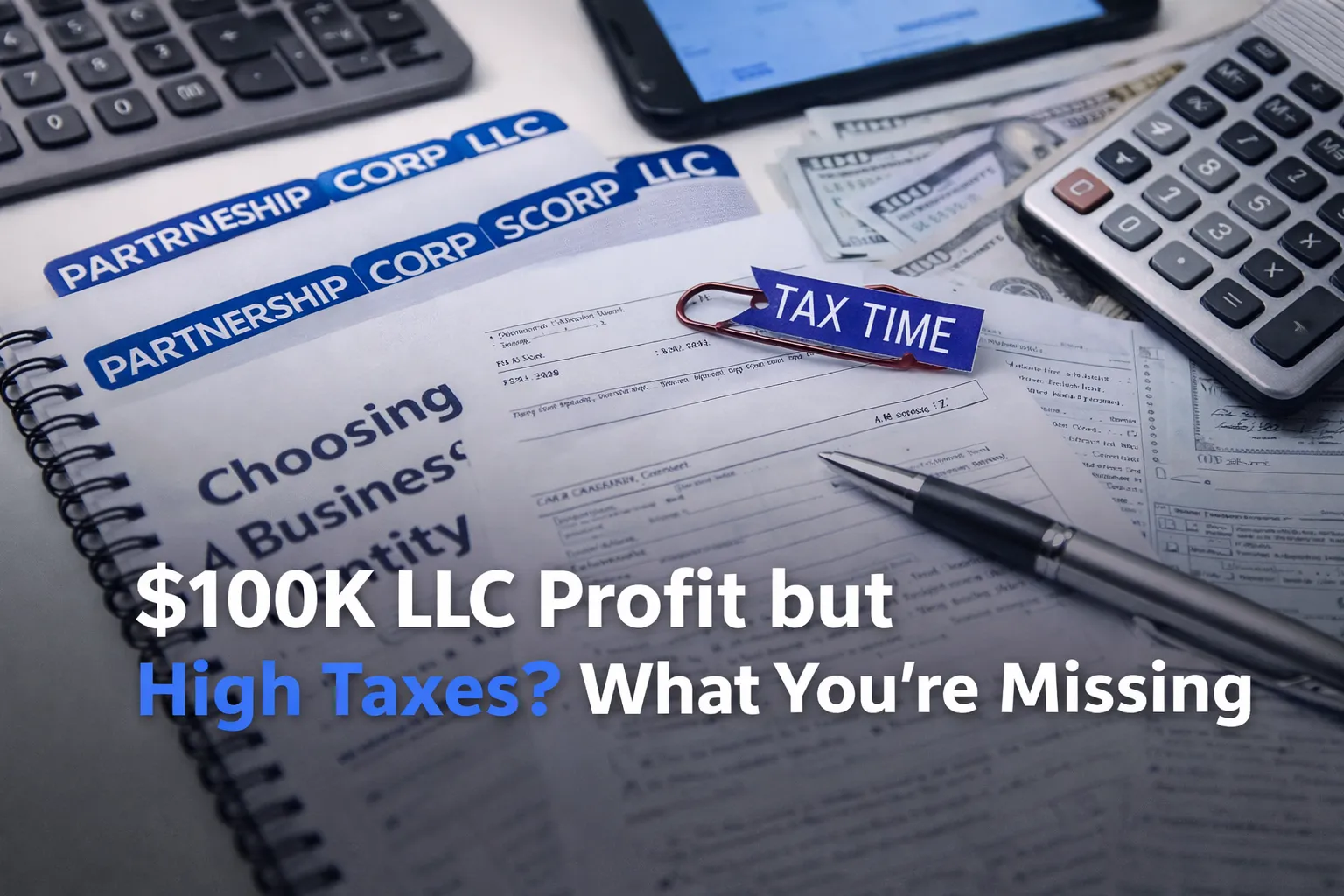
Simple example: $100,000 profit
- LLC: Full $100,000 taxed at 15.3% → $15,300 self-employment tax
- S-Corp: You take a $60,000 salary
Payroll tax = $9,180
Distribution ($40,000) is not subject to self-employment tax
That’s $6,120 in tax savings.
And this is only one year, and the savings can compound as your profits grow.
But what's the Trade-Off?
While the tax benefits of an S-Corp can be powerful, the structure comes with added responsibility.
You’ll need to factor in:
1. More paperwork
An S-Corp requires filing two tax returns each year — one for the corporation and one for the owner.
2. Proper payroll setup
You must:
- Pay yourself a reasonable salary
- Run payroll consistently
- Remit payroll taxes
- File quarterly and annual payroll reports
3. Additional expenses
You may need:
- Payroll software
- Bookkeeping support
- A tax professional familiar with S-Corp compliance
If your profit is too low, these additional expenses can offset any tax savings.
The $75,000 Profit Threshold
You’ll hear different numbers, but most tax professionals agree that the S-Corp structure becomes worthwhile once your business consistently earns $75,000+ in annual profit.
Why $75,000?
- It's typically the point where the tax savings exceed the additional payroll, software, and compliance costs.
- Below that level, the savings often shrink, sometimes to the point where the S-Corp offers little to no net benefit.
Consistency matters.
A one-time spike in profit usually isn’t enough to justify the administrative changes required.
When to Seriously Consider Making the Switch
You may be ready to explore S-Corp status if:
- Your business profit is approaching or over $75,000
- You expect profits to remain steady or grow
- You want to reduce your self-employment tax burden
- You’re ready for more structure, payroll compliance, and monthly bookkeeping
- You want to use smarter tax strategies to keep more of your income
An S-Corp can be a powerful next step if your business is growing and you're committed to long-term planning.
Need help evaluating whether an S-Corp is right for you?
Choosing the best business structure is a major financial decision, and one that depends on your profit levels, expenses, long-term goals, and personal tax situation. We can help you run the numbers, compare scenarios, and choose the strategy that benefits you most.
Email us anytime or schedule a consultation — we’re here to help you make the smartest tax decisions for your business.
DISCLAIMER: This article is for general education. It is not tax, legal, or accounting advice. Rules change and facts matter. You'll need to consult a qualified tax professional who can look over your specific situation. We are not serving as your tax preparer or tax advisor here.
Expert Tax and Bookkeeping Insights from Our Team























.webp)


-2.webp)

Schedule your consultation to get a professional tax service you can trust
.avif)


Charlotte, North Carolina 28226
McMullen Creek Office Building